Buying Guides
Chainmail vs Fibre Cut-Resistant Gloves: How to Choose
Chainmail or fibre? Compare both on cut, puncture, weight, cleaning and food contact, then match the glove to your task before you ask us for a quote.
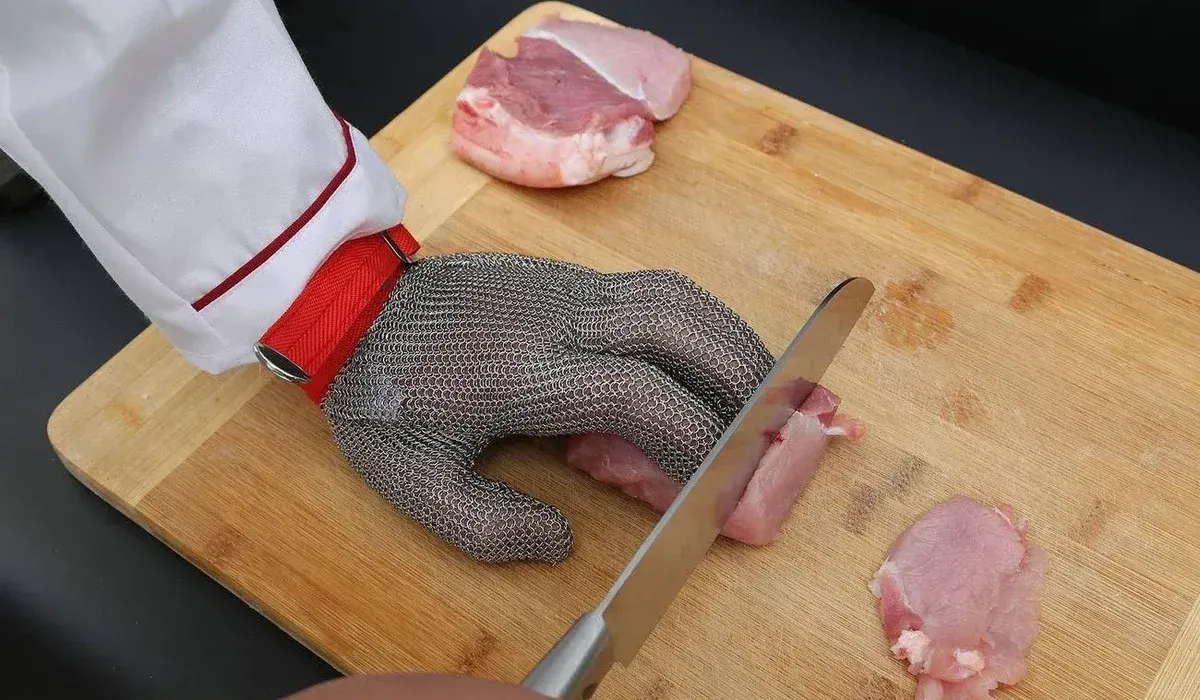
If knives touch your hands directly for long shifts every day, choose chainmail. If you need fine finger work at medium risk, choose fibre. The two materials are complements, not substitutes, and the right choice follows the task, not the label.
Before you ask any supplier for a price, check four things: what the blade can do to a hand, how the glove handles oil and water, how it is washed, and what food-contact proof it carries. This article compares chainmail and fibre on the same eight points, so you can name the right material first.
It fits buyers choosing a glove system for meat, seafood, or glass handling.
The Wrong Glove Costs You Twice
You order twenty gloves, they arrive, and by the second week half your line has stopped wearing them. The gloves are not broken. They are the wrong material for the job, and now you are ordering again while the first set sits in a cupboard.
That is the cost of choosing by label. A glove that stops a blade but tires the hand fails just as surely as a glove that feels light but lets a blade through. The fix is not a better label. It is a short check of the task before you buy.
This article gives you that check. It compares chainmail and fibre on eight points, using only facts you can verify, and it ends with four questions you can answer in five minutes. Answer them, and the material picks itself.
Eight Points That Decide the Material
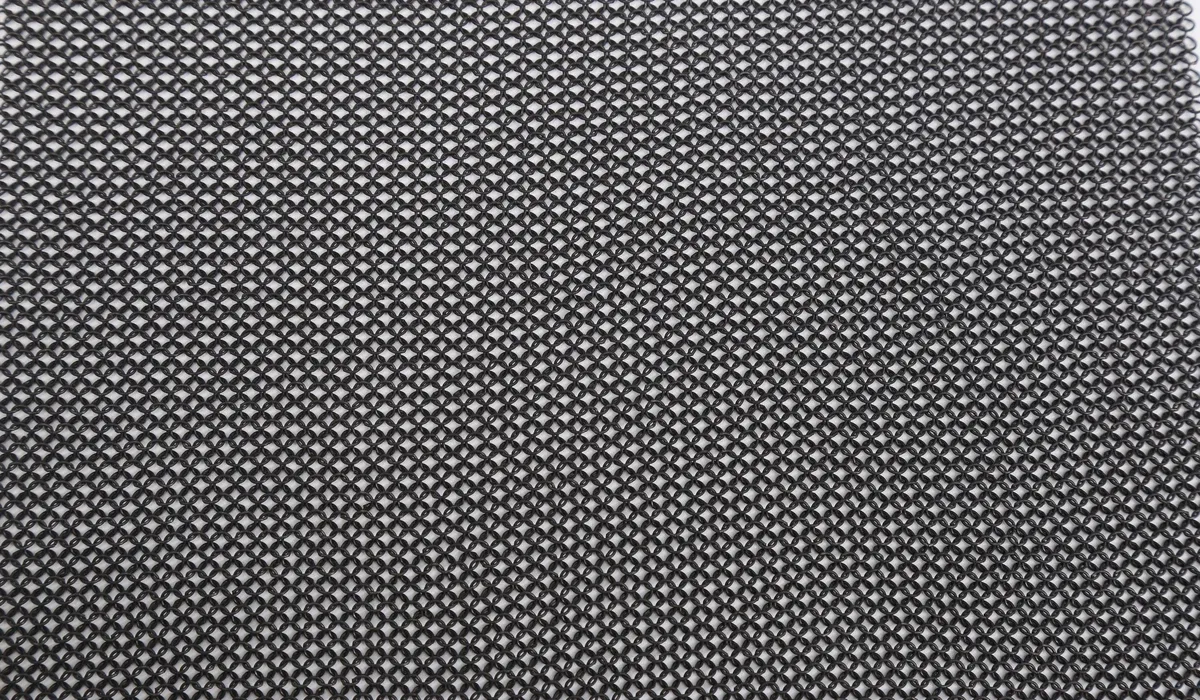
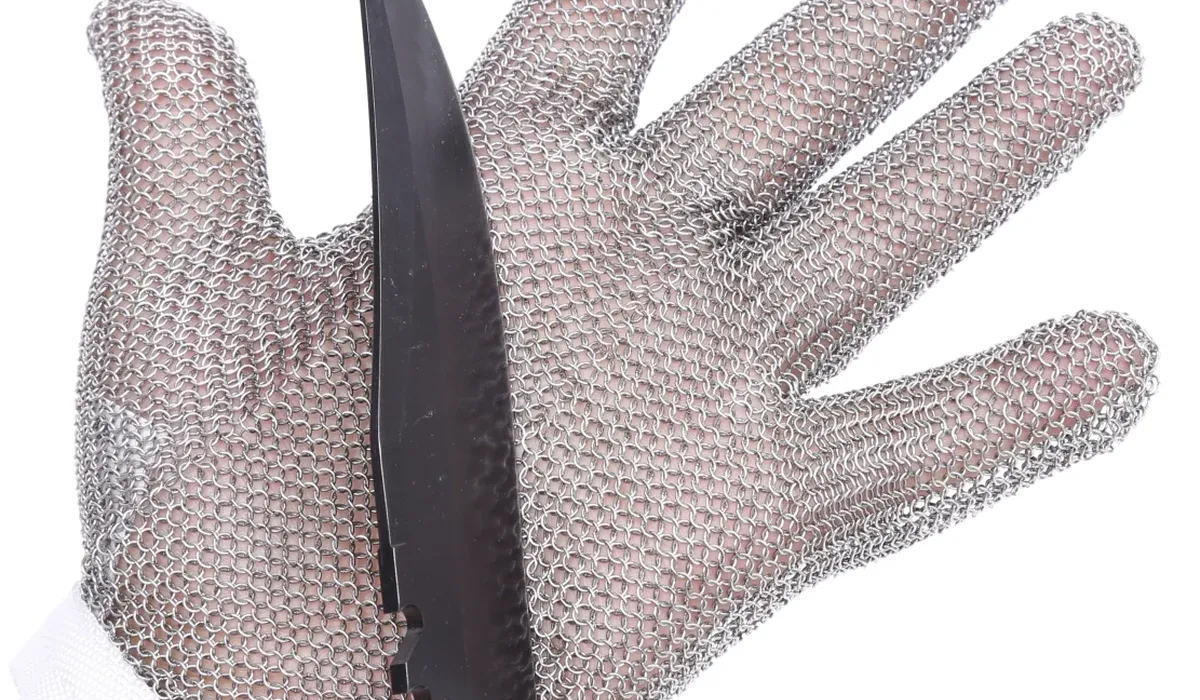
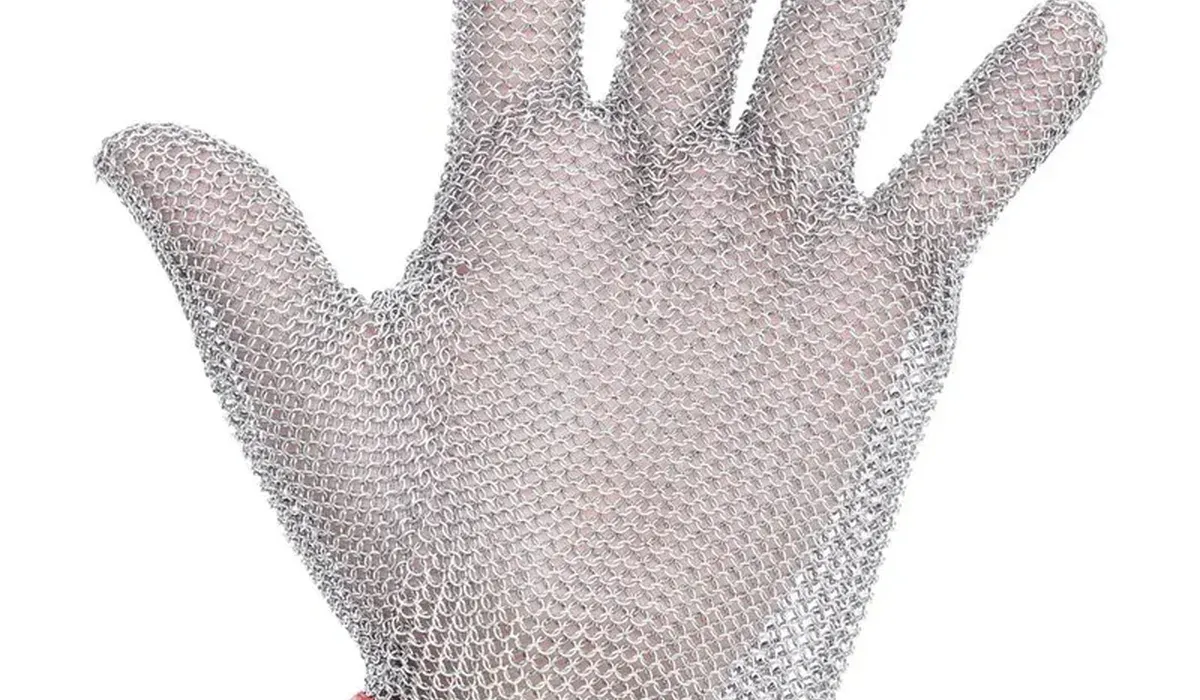
Cut. Our chainmail glove is AISI 316L stainless steel rings, 3.81 mm across, linked into a mesh that protects against cuts and stabs from hand-held knives. It is certified model by model under EN 1082-1, and our samples reached ANSI A9 in one 2020 test. Ask a fibre supplier for two things: its cut level and the test behind it.
Puncture. A cut level is not a puncture rating, and the two are tested in different ways. EN 1082-1 covers chainmail gloves and arm guards against cuts and stabs from hand-held knives. Ask the fibre supplier how puncture is tested for its glove, what the rating covers, and whether the rating comes from a certificate or a sample test.
Weight and flexibility. We do not publish a weight figure for our gloves, because no verified figure exists, so weigh a sample in your own hand before you order. Buyers often report that chainmail feels heavier over a long shift and fibre feels more flexible. Trust your own trial, not a brochure line.
Cleaning. Wash our chainmail gloves at least once a day in 50 °C soapy water or water with detergent, then store them in a cool, ventilated place. A steel hook has no fabric to hold water, so ask how a textile strap and a fibre glove handle the same daily wash. Do not accept machine-wash or dishwasher claims without written confirmation.
Food contact. Our 316L stainless steel passed SGS food-contact testing, FDA and LFGB, in 2024, at material level. That is a test result, not an approval from the FDA, and we will not call it anything more. Ask the fibre supplier for its own food-contact evidence in writing before the glove touches food.
Heat. Steel carries heat, so a chainmail glove on its own is not a heat glove. The heat tolerance of a plastic snap strap is not confirmed either, so do not guess it. If your task involves hot surfaces, ask both suppliers what their glove is rated for and how that rating was tested.
Durability. One ring from our glove was tested in 2023 and reached 222 N of tensile force. That is a single-sample result, not a batch promise, and we will not dress it up as one. Steel mesh does not fray the way fibre can, but we publish no lifespan figure, so ask how each supplier measures wear.
Cost over time. We publish no prices and no minimum order figure, because neither is confirmed. We quote EXW Anping, and freight is confirmed with the order. Compare the full picture instead: the glove cost, how often it must be replaced, and what washing costs. A glove your team will not wear is money spent twice.
Match the Glove to the Task, Not the Label
Start with the blade. If the knife meets the hand directly for hours — deboning, trimming, filleting — chainmail is the working choice, because its protection is the mesh itself and it does not depend on a coating that can wear thin. If the risk is medium and the work needs fine finger control, fibre may serve you better.
One plant can use both. Put chainmail where the blade meets the hand, and fibre where dexterity matters more than cut protection. The mistake is not using two materials. The mistake is buying one material for every job and hoping it fits them all.
Then check the coverage. A wrist glove protects the wrist. When the risk runs past the wrist — reaching into a carcass, handling large cuts, working deep inside — add a cuff: the 1201 or 1301 series, each in 8 cm, 15 cm or 20 cm cuff lengths.
The 20 cm length is the certificate reference value, so confirm availability when you order. Add an apron when the torso is exposed too.
Sizes run XXS to XXL for sale, and CE coverage runs to XL, so an XXL glove is not covered by the current CE certificates. Tell us the size of the glove you wear now and we will confirm the match before you order.
Both wrist models hold CE certification under EN 1082-1: the 5201 under certificate 2777/26322-01 to 2029-10-24, and the 5101 under certificate 2777/12679-02 to 2029-04-26.
The factory that makes these gloves passed a SMETA four-pillar audit on 2024-03-12, and its ISO 9001:2015 system certificate, 02825Q11517R0M, runs to 2028-05-13.
Four Mistakes That Waste an Order
The first mistake is buying on a label. No glove stops every blade, and any supplier who says otherwise is selling a word, not a glove. Ours are cut-resistant, and that honest line should be the first thing you check on any glove you buy.
The second mistake is taking a sample result for a certification. Our ANSI A9 rests on one CTC Shanghai report, S201212763_1, from 2020, which measured over 13000 g on the samples sent in. That result covers those samples only. It is not a product certification and it does not extend to the whole range.
The third mistake is ordering the wrong size or the wrong closure without trying it. An XXL glove is not CE covered, so check that before you order. A steel hook and a textile strap feel different on a real shift, so try the closure you plan to buy.
The fourth mistake is skipping the real-shift trial. A glove that fits the hand but not the shift ends up in a cupboard, and the second order costs more than the first. One shift of wear tells you more than any data sheet.
Your Next Step: Four Questions Before You Ask for a Quote
Answer four questions and write the answers down. What blade meets the hand, and for how many hours a day? How much oil and water does the job bring? How will the glove be washed at the end of the shift? What food-contact proof does your customer or inspector require?
Those four answers are your enquiry. Send them with the model you lean toward, your size, quantity, and target market to sales@steeloramesh.com, and we will confirm which model fits, list any evidence still missing, and reply within 1 working day. That reply is a named model and a clear next step, not a sales call.