Buying Guides
How to Clean and Store Chainmail Gloves
Wash chainmail gloves at least once a day in 50 °C soapy water, dry them fully, and store them cool and ventilated — plus how to check a site-specific sanitation process.
Wash a chainmail glove at least once a day in 50 °C soapy water, rinse it, dry it fully, and store it in a cool, ventilated place. That is the whole daily routine, and it is the same for our 5201, 5101 and 5301 wrist gloves and for the longer-cuff models.
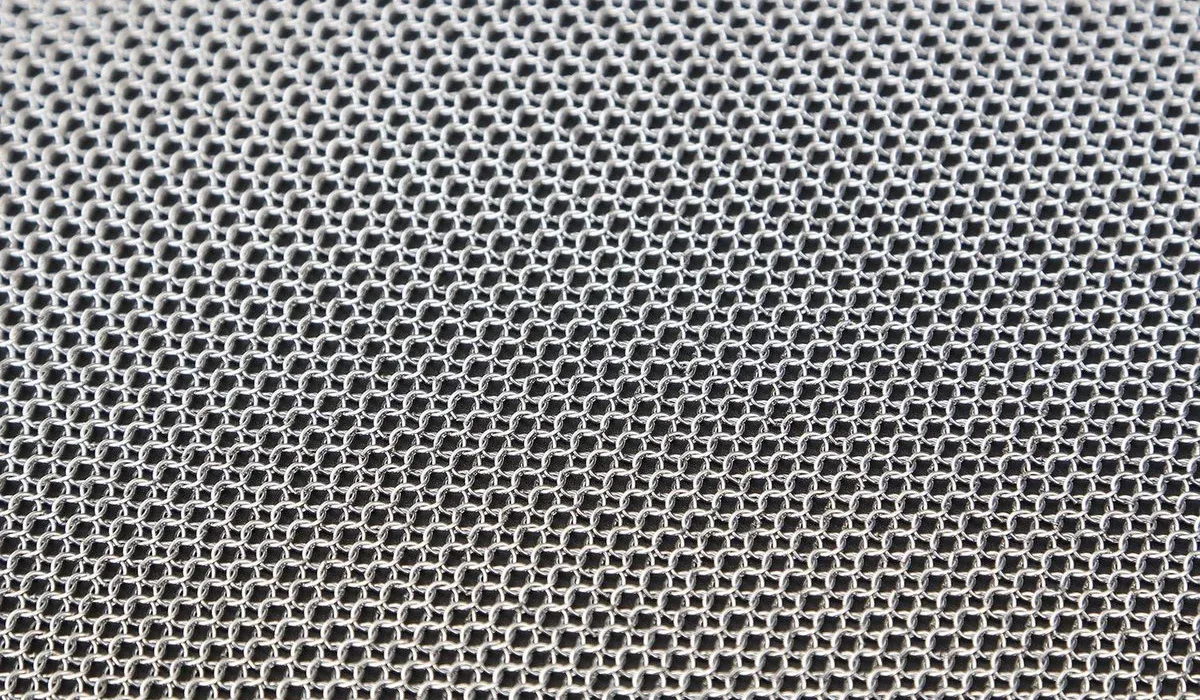
The routine does not change with the model, because the material is the same: AISI 316L stainless steel rings, 3.81 mm across, linked into a mesh with 0.52 mm wire. What does change is your site's own sanitation process.
If your facility uses its own chemicals, contact times or washing equipment, check that process against the exact glove before you use it. This guide covers the daily routine, the site-specific check, and the things it does not confirm.
A Glove That Skips Washing Fails Twice
A line runs well for a month, and then the sanitation audit finds gloves that smell of yesterday's shift. Nobody skipped a step on purpose.
The gloves were washed when someone remembered, stored where there was space, and put back on while still damp. The audit does not fail the glove. It fails the routine, and the routine is the part this guide fixes.
A chainmail glove is steel, so it does not rot the way fabric can, but it still carries everything it touched. Blood, fat and food residue sit between the rings, and a glove that looks clean can still carry yesterday's shift into today's food. Washing is not cosmetic. It is the step that keeps a cut-resistant glove a food-safe glove.
The second failure is slower. A glove that is never fully dried starts to smell, and a glove that is stored wet in a closed box stays wet.
The steel itself resists corrosion well — our rings are AISI 316L, the grade chosen for chloride resistance — but trapped moisture and residue still make the glove unpleasant to wear, and a glove nobody wants to wear is a glove nobody wears. Care fails twice: once at the audit, and once at the hand.
Wash, Dry, Store: The Daily Routine
Clean the glove at least once a day, and more often if your facility's hygiene programme requires it. Food-processing sites usually wash gloves at the end of every shift, and some wash them at every break. Your facility's rule decides the frequency. The minimum is once a day, and the minimum is not a target to beat downward.
Wash the glove in soapy water at 50 °C, or in hot water at 50 °C with detergent. Work the soapy water through the mesh so it reaches between the rings, where residue collects.
Pay attention to the fingertips and the palm, where contact is heaviest, and to the wrist closure, where residue can sit under a strap or around a hook. Rinse the glove after washing so no detergent stays in the mesh.
A steel hook has no fabric to hold water, so the 5201 dries faster at the wrist than a textile strap does.
The 5101's adjustable textile strap and the 5301's plastic snap strap need a moment of attention: make sure the strap itself is washed and left to dry, not just the mesh. A strap that stays damp will smell before the steel does.
Dry the glove fully before you store it. Shake off the water, then leave the glove where air moves around it. Do not put a wet glove into a closed box, a locker without ventilation, or a plastic bag. A glove that is stored wet stays wet, and the next shift starts with yesterday's moisture.
Store the glove in a cool, ventilated place. Hang it or lay it flat where air can reach both sides, away from heat and away from chemicals.
Do not store it on top of a hot pipe or beside cleaning products. The storage step is short, but it is the step that decides whether the glove is ready or merely put away.
Check the glove as you wash it. Look for rings that have opened, a hook that no longer closes firmly, or a strap that has frayed.
This guide does not set inspection or replacement criteria — those are product-specific, so ask us what applies to your model — but a daily look costs nothing and catches the obvious problems early. A glove with a broken ring is not a glove to keep using while you wait for an answer.
When Your Site Runs Its Own Sanitation Process
Many food-processing sites work with their own approved chemicals, contact times and washing equipment. That process was approved for the site, not necessarily for a chainmail glove. Before you apply it to a glove, identify the exact glove and check whether the chemical and the washing method suit it.
Send us the process details before you order, so the check happens before the gloves arrive. The details we need are the glove model or closure type, if known; the intended application; the cleaning chemical or detergent name; the concentration, water temperature and contact time; and whether the process is manual washing or machine cleaning.
The chemical matters because not every cleaner suits stainless steel. A cleaner that is fine for a worktop can be wrong for a mesh glove, and the wrong chemical can attack the steel or leave a residue that the rinse does not remove.
The temperature matters because the glove's parts do not all behave the same way: steel takes heat, but a plastic snap strap has limits that are not confirmed, so do not guess them.
Machine cleaning needs the same check. A washer that is approved for other equipment may use a cycle, a temperature or a chemical that a chainmail glove should not meet.
Dishwashers and autoclaves fall in the same group: this guide does not confirm them, and neither does a general equipment manual. Send the process and let us check it against the exact glove.
If your site changes its sanitation process, check the glove again. A new chemical, a longer contact time or a hotter cycle is a new process, even if the glove is the same. The check is short, and it is cheaper than a line full of gloves that cannot be used.
Four Things This Guide Does Not Confirm
Compatibility with named disinfectants is the first. This guide names no disinfectant as safe for a chainmail glove, because compatibility depends on the chemical, its concentration, the contact time and the exact glove. If your process names a disinfectant, send its details for a product-specific check.
Industrial washers, dishwashers, autoclaves and steam processes are the second. None of them is confirmed by this guide. A machine that cleans other equipment well can still be wrong for a mesh glove, and steam in particular needs a separate confirmation before it meets any glove.
Inspection, repair, replacement and service-life criteria are the third. This guide tells you to look at the glove every day, but it does not tell you when a glove must be repaired or replaced, because those limits are product-specific. Ask us what applies to your model, and do not set the limit by guessing.
The fourth is the glove's protection itself. Washing does not change what the glove protects against, and a clean glove is not a stronger glove.
The rings are AISI 316L stainless steel, 3.81 mm across, and the glove is certified model by model under EN 1082-1: the 5201, the 1201 series, the 5301 and the 1301 series under certificate 2777/26322-01 to 2029-10-24, and the 5101 under certificate 2777/12679-02 to 2029-04-26. Care keeps the glove ready. It does not extend the certificate.
Your Next Step: Match the Process Before You Order
Write down your cleaning process before you ask for a quote. The chemical name, the concentration, the water temperature, the contact time, and whether the process is manual or machine. Those five lines are enough for us to check the process against the model you want.
If your facility uses a defined chemical or machine-cleaning process, send us the glove model or closure type together with the sanitation details for review before ordering. Send them to sales@steeloramesh.com, and we will confirm what the process means for the glove, list anything still missing, and reply within 1 working day.
Enquiry checklist
Glove model or closure type, if known; the intended application.
Cleaning chemical or detergent name, with concentration and contact time.
Water temperature and the washing method: manual or machine.
Whether the glove is washed daily, and where it is stored.
Any disinfectant, washer, dishwasher or steam step in the process.